Showing posts with label reflexology. Show all posts

Tuesday, April 7, 2015

What is Natural Reflex Therapy®?


by Kim Krost, BA, RA


Throughout history healers from many cultures discovered that points, meridians and zones were located all over the body and may be accessed by a variety of methods including: needling, acupressure or electric stimulation.

Reflex points were written about and charted by several doctors of osteopathy (Owen, Chapman, Fitzgerald and Riley) in the early 1900’s. In addition Eunice Ingham, a protégée of Dr. Riley’s was responsible for sharing this knowledge in a practical way with thousands of people through seminars thereby making Reflexology the common term for working with reflex points.  

Natural Reflex Therapy® is a trademarked holistic wellness modality that works exclusively with the reflex points of the body to facilitate relaxation, wellbeing and homeostasis (the ability to achieve healthy function or equilibrium). Natural Reflex Therapy® techniques may be used on any reflex point on the body including: the feet, hands, ears or whole body.

                                        http://static.parastorage.com/media/289a03_4c30b4960cb2117aa1cb72818658a367.jpg_256

Natural Reflex Therapy® techniques are non-invasive, non-painful and effective for many health issues. Proper stimulation of reflex points found throughout the body may affect a wide variety of physical ailments, including neurological, muscular, lymphatic and endocrine dysfunctions.  This therapy also has the added benefit of being just as effective with a clothed person as in a massage. It is suitable for all ages and even for pets.  Cost for a therapeutic session is around $45 for half-hour and $70 for one hour.

Natural Reflex Therapy® may be used with:
·        Low Back, Hip Pain & Sciatica
·        Insomnia
·        Endocrine Imbalances
·        Headaches & Allergies
·        Irritable Bowel Syndrome
·        Stress & Anxiety
·        Arthritic Conditions
·        Shoulder & Neck Discomfort
·        Fibromyalgia Syndrome & Chronic Fatigue
·        Ankle & Foot Pain
·        Carpal Tunnel Syndrome

Benefits:
·            Beneficial for High or Low Blood Pressure
·            Strengthens the body's ability to deal with Stress
·            Stills Brain Chatter
·            Soothes the Digestive System
·            Energizes the Immune System
·            Promotes gentle elimination of toxins
·            Induces Calmness
·            Restores flexibility to muscles, joints and bones
·            Improves posture
·            Assists the healing process after trauma or surgery

While this technique can be used in conjunction with massage therapy or physical therapy, it is also easily taught and understood by individuals for self-care, to add to an existing practice or as a stand-alone wellness modality. For more information about the Natural Reflex Therapy® Practitioner program contact Kim@integrativehealingsa.com.

About Kim Krost
Kim Krost is owner of Integrative Healing Institute® in San Antonio Texas. She is a licensed massage therapist and massage therapy instructor teaching a variety of wellness classes including Reflexology. In addition to management of the Institute she has maintained a holistic bodywork practice since 1999 using Lymphatic Drainage Therapy, Reflexology, and Natural Reflex Therapy®.

Wednesday, March 18, 2015

Reflexology and Your Health


    The healing art of what we call Reflexology dates back to 5,000 BC where we understand that it was practiced in ancient India, Egypt and China. Trade routes between these countries, their Asian neighbors and eventually the West during the Middle Ages brought a wealth of knowledge about many ancient healing practices. Reflexology is one of the oldest surviving healing techniques still practiced today.
    According to author Mark Beck, “…reflexology is based on the principles that reflex points in the hands and feet are related to every other organ in the body. By applying pressure to a reflex point, the practitioner can effect certain beneficial changes.” (Beck 776)
 
How Does It Work?

     Neuro-lymphatic Reflexes located throughout the body including the hands and feet help to normalize, balance and encourage homeostasis within the body when properly stimulated. There are several forms of reflexology, but foot reflexology is the most common form taught and practiced today.
     Reflexology is holistic wellness technique affecting multiple systems and functions including; the lymphatic system, the endocrine system, the circulatory system, the meridian system, the nervous system and the proprioceptive system. (Stone 18)

Benefits of Reflexology

·       Reflexology relieves stress by eliciting the relaxation response. (Wright 14)
·       Reflexology is a clothed therapy and is a perfect alternative for individuals who do not feel comfortable having massage.
·       Reflexology is non-invasive or non-painful.
·       Reflexology benefits people of all ages.
·       Reflexology improves overall function of the body and is a holistic form of therapy.
·       Reflexology teaches and promotes healthy body awareness.
·       Reflexology improves circulation of blood and lymph and benefits nerve function. (Wright 30)
·       Reflexology is helpful for painful conditions of the feet and/or hands.
·       Hand and Foot Reflexology is perfectly suited for self-care.
·       Reflexology sessions of the hands and/or feet affect both hemispheres of the brain. (The right hand or foot is dominantly controlled by the left hemisphere of the brain and left hand or foot the right hemisphere).

Contrary to popular belief, Reflexology does not have to hurt to be effective in fact the opposite is true. Working with the body’s reflexes without creating pain allows the body to sense dysfunction and make internal adjustments that are noticed as healing.
When a Reflexology session is given without pain it creates a more optimal learning situation for the body. Non-invasive therapy means that there should be no pain involved.

   Reflexology Reference Charts

     There are many different versions of foot and hand reflexology charts. There is even an interactive version for your phone. Reflexology charts will enable you to map the reflexes, but If you are interested in doing Reflexology as a hobby or even a profession taking a live course or two will enable you to work with the reflexes with confidence.

A basic Reflexology course should help the student to:
·       Understand the contraindications (precautions)
·       Learn the benefits of Reflexology
·       Understand how to give a therapeutic Reflexology session 
·       Market and price your Reflexology session appropriately
·       Feel confident about performing non-invasive Reflexology techniques
·       Be informed about the licensing laws in your state.

Sources
Beck, Mark F. Theory & Practice of Therapeutic Massage 4th Edition. New York;
Thomson Delmar Learning. 2006.

Stone, Paula S. Therapeutic Reflexology, A Step-by-Step Guide to Professional
Competence. Boston; Pearson Education Inc. 2011.

Wright, Janet. Reflexology and Acupressure: Pressure Points for Healing. CRES
Publishing. 2000.

Bio:
Kim Krost is owner of Integrative Healing Institute in San Antonio Texas. She is a licensed massage therapist and massage therapy instructor teaching a variety of wellness classes including Reflexology. In addition to management of the Institute she has maintained a holistic bodywork practice since 1999 using Lymphatic Drainage Therapy, Reflexology and Natural Reflex Therapy®, a technique she co-created that helps to balance endocrine system function in the body.


Saturday, July 6, 2013

Plantar Fasciitis: Why Do My Feet Hurt?

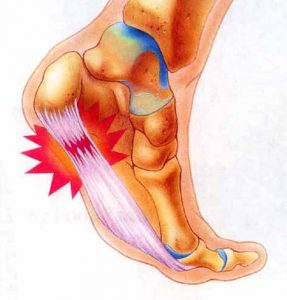
Plantar fasciitis ("PF") involves pain and inflammation of a thick band of tissue called the plantar fascia, which runs vertically across the bottom of your foot, connecting your heel bone to your toes.  Plantar = sole of the foot.  Fasciitis = inflammation ("itis") of the fascia.  PF can affect one or both feet and is a common cause of heel pain or pain in the arch that can range from mild to debilitating.  Pain is often worse in the morning and after sitting for a length of time.


Not every case of PF finds relief from medical procedures such as cortisone shots and surgery.  Reflexology is a form of bodywork applied to the feet that is a tool worth considering for its non-invasive nature and holistic approach to wellness.  Doctors often recommend friction massage to the bottom of the foot, but a reflexologist looks further at how PF affects the entire body and may apply a broader approach with attention to other areas

Holistic Approach for Helping Plantar Fasciitis (“PF”)

If you have been diagnosed with Plantar Fasciitis, you’ve likely tried conventional methods of treatment from physical therapy to medications.  These may provide temporary relief but the pain often returns weeks, months or even years later.  What’s missing?  Addressing the cause and effect.


Causes and Aggravants
  • ·      Increase in physical activity (walking, running, standing, exercise equipment)
  • ·      Non-supportive footwear (high heels, slippers, flip flops, extremely flat sandals)
  • ·      Faulty foot/leg structure, injuries, weak arches, improper gait
  • ·      Excess body weight.  A force of 3x our weight is absorbed through legs and feet with each step.  So, a 200 lb. body exerts 600 lbs. of pressure into the feet.


Reasons PF Symptoms Return:
  • ·      Band-aid treatments (drugs, braces, shots), not seeking the causes
  • ·      Inconsistent treatment or stopping short of frequency to get results
  • ·      Lack of self-care with exercise, stretching, ice therapy, etc.
  • ·      Lifestyle habits remain that cause or aggravate or worsen PF
  • ·      Maintenance sessions aren’t schedule for preventative measures
  • ·      Use of medications that mask pain and give a false sense of resolve


How Can Reflexology Help PF

With the application of specific techniques, reflexology can improve circulation for lower legs and feet, reduce adhesions in fascia, help to ease muscle tension and provide pain relief.  Lymphatic techniques reduce soft-tissue inflammation.  Reflexology stimulates endorphins to reduce pain overall.  Cold therapy reduces inflammation while heat therapy reduces pain.

Dr. Andrew Weil, MD comments on reflexology:
“Reflexology is a foot-focused therapy…a health-supporting treatment.  I’ve prescribed reflexology for plantar fasciitis and foot and ankle problems with good result.”

If you have PF, consider adding reflexology to your regiment of care.  Call (210) 967-4400 for more information or to schedule your appointment.

Sunday, June 2, 2013

Reflexology: Benefits and History


Reflexology is the ancient art of stimulating reflex areas that relate to different parts of the body, including organs, muscles and glands.  Working on these reflex points can trigger physiological changes in specific areas of the body by stimulating the circulatory and lymphatic systems.  The benefits of Reflexology include reducing stress and tension, improving circulation, alleviating pain, balancing the nervous system, boosting lymphatic function, improving sleep patterns, increasing energy, relieving digestive issues and detoxifying the body.
In 1917 Dr. William Fitzgerald began studying the effects of “Zone Therapy” where he found that he could relieve pain in other parts of the body by working on corresponding “zones” in the hands and feet. Inspired by Dr. Fitzgerald’s work, Eunice Ingram did further research and discovered that feet were more responsive to pressure than hands. She also created a map of the body with the corresponding reflex points on the foot. In 1973 the first Reflexology Association was started in America and has helped to introduce the practice to many more people.

We offer Reflexology sessions as well as classes open to the general public. Experience the benefits of Reflexology for yourself!